

- Folder Internal News
- Views 909
- Last Updated 04/12/2025
National Institute for Food Control (NIFC), in collaboration with the SAFEGRO Project, has organized an advanced training course on quantitative food safety risk assessment to further strengthen the capacity of Vietnamese experts. The programme aims to promote the use of modern analytical tools and specialised software in the risk assessment process, contributing to an evidence-based and science-driven food safety management system.
To provide participants with the most up-to-date tools and methods in the field, the advanced course “Advanced Training on Quantitative Risks Assessment for Food Safety” was held from 24–28 November 2025. This training serves as an important milestone, supporting the application of scientific evidence in food safety management and moving towards a more transparent and effective management system in Viet Nam.
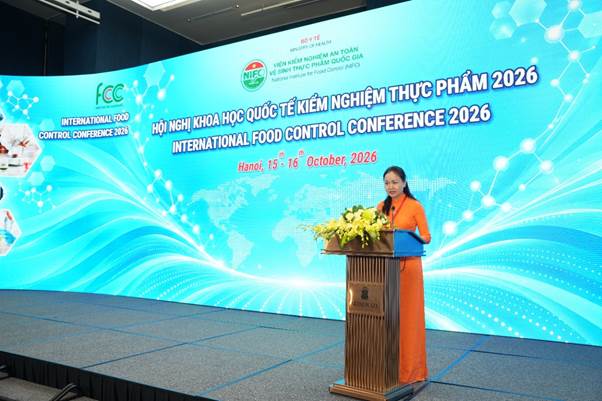
At the opening ceremony, Assoc. Prof. Tran Thi Dinh, representative of the SAFEGRO Project, highlighted the crucial role of quantitative risk assessment as a foundation for evidence-based decision-making. The course was designed not only to strengthen theoretical understanding but also to guide participants in addressing real-world issues related to chemical and microbiological hazards across the food chain.
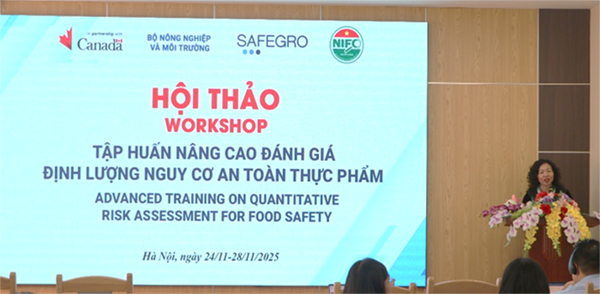
Assoc. Prof. Tran Thi Dinh gave the opening speech of the class
More than 30 trainees took part in the programme, comprising experienced specialists from key institutions such as the Vietnam Center for Food Safety Risk Assessment – NIFC, Reference Testing & Agrifood Quality Services Center, and National Authority for Agro- Forestry-Fishery Quality, Processing and Market Development, together with delegates from various research institutes under the Ministry of Health, Ministry of Agriculture and Environment, and students from universities nationwide. This diversity created a dynamic academic environment, encouraging the exchange of knowledge from multiple managerial and professional perspectives.
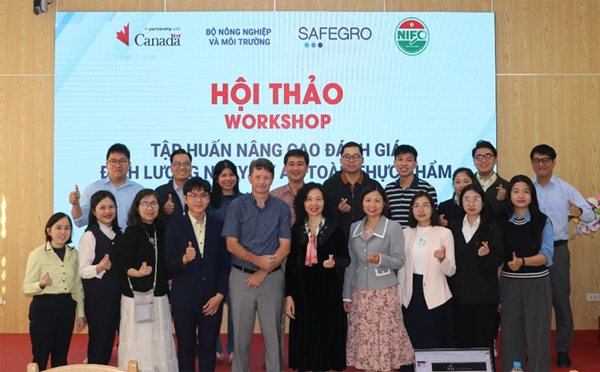
Participants who have a certain amount of experience in the field of food safety risk assessment
Participants followed a comprehensive and practice-oriented curriculum, including:
- A review and update of core theories in food safety risk assessment.
- Hands-on training with FDA-iRISK, an advanced risk assessment tool developed by the US Food and Drug Administration (FDA).
- Methods for quantifying chemical (carcinogenic and non-carcinogenic) and microbiological risks.
- Advanced techniques such as sensitivity analysis, dietary exposure analysis, and modelling.
- Case studies and final assessments to reinforce the application of new knowledge.
Under the guidance of Dr. Greg Paoli, a leading international expert, trainees engaged in active discussions and worked collaboratively to address complex technical challenges.

TS. Greg Paoli instructs students in the course
At the closing ceremony, Assoc. Prof. Dr. Le Thi Hong Hao, Director of the National Institute for Food Control, congratulated the participants and stressed the scientific value and essential role of food safety risk assessment. She encouraged experts to continue contributing as key knowledge disseminators, supporting the development of a strong national network for food safety risk assessment.
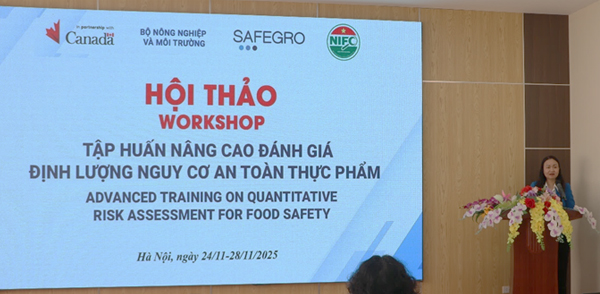
Assoc. Prof. Le Thi Hong Hao delivered the closing speech of the class
The course not only provided advanced knowledge but also served as an important platform connecting scientists, managers, and technical experts across the country and with international partners. It lays the foundation for building a professional community dedicated to a common goal: enhancing the effectiveness of evidence-based food safety management and protecting public health in Viet Nam.
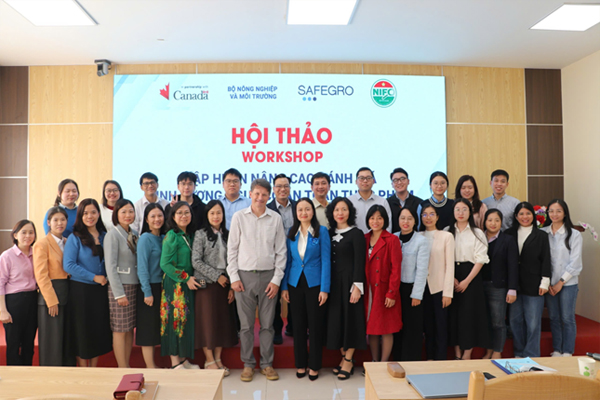
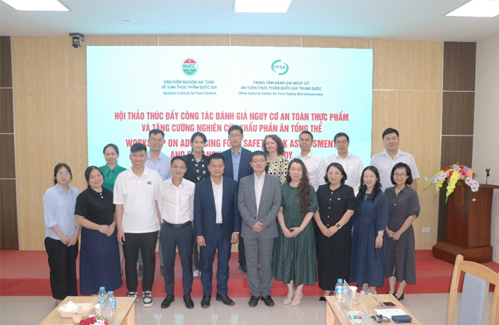
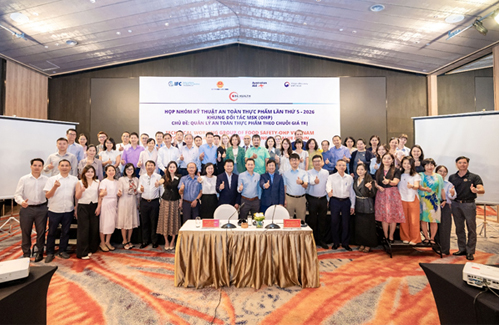
Photos of the course students at the Closing Ceremony
Implemented by: Vu Thi Thanh An, Vietnam Center for Food Safety Risk Assessment