

- Folder Internal News
- Views 53
- Last Updated 20/10/2026
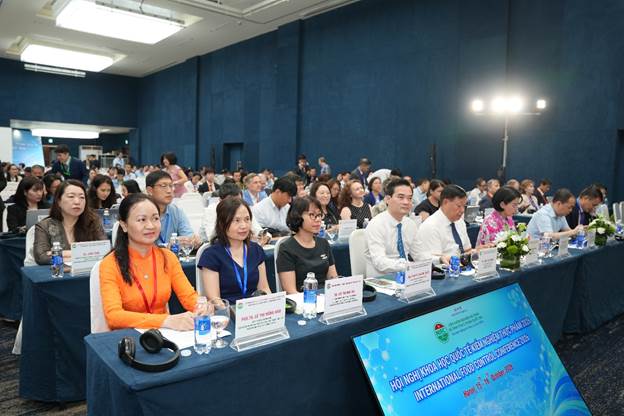
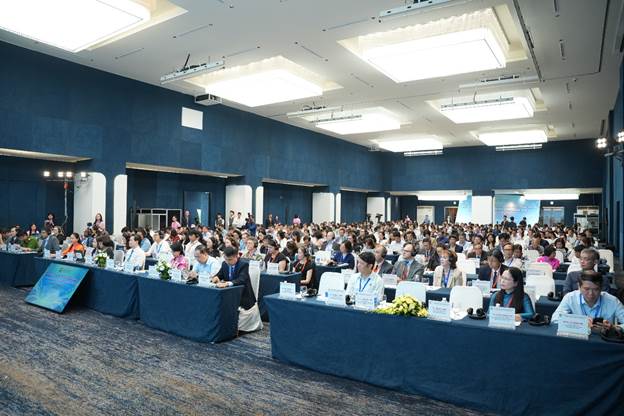
On the morning of October 15, 2026, the National Institute for Food Control (NIFC), under the Ministry of Health, officially opened the International Food Control Conference 2026 (FCC 2026) at the Grand Plaza Hanoi Hotel.
Held under the theme “Smart Food Safety Control Towards International Harmonization,” FCC 2026 brought together more than 500 delegates from 12 countries, including representatives of regulatory authorities, international organizations, research institutes, universities, testing laboratories, and businesses.
FCC 2026 serves as an international scientific forum connecting policymakers, scientists, and experts in food testing and food safety control. It provides an opportunity to share research findings, scientific and technological advances, and practical experience, contributing to stronger laboratory capabilities, risk-based food safety management, and international integration.
Advancing Food Testing Through Scientific Evidence and Data-Driven Management
Delivering the opening address, Mr. Do Xuan Tuyen, Deputy Minister of Health, emphasized that food safety directly affects public health, the quality of human resources, consumer confidence, and the competitiveness of Vietnamese products.
Against the backdrop of increasingly complex food supply chains and the coexistence of traditional and emerging hazards, he stressed the need for food safety management to shift from a reactive approach focused on detection and corrective action toward proactive hazard identification, risk assessment, surveillance, and prevention.
The Deputy Minister reaffirmed that food testing is an essential component of the food safety management system. Accurate, reliable, and timely testing results not only help determine product quality and safety but also provide scientific evidence for risk assessment, the development of standards and technical regulations, post-market surveillance, incident investigations, and risk communication.
He emphasized that the value of laboratory testing must extend beyond individual sample results. Testing data should be integrated into broader information systems and used to inform regulatory decision-making.
In particular, he highlighted the importance of effectively utilizing laboratory data and linking analytical results with information systems and regulatory decisions to strengthen early warning and risk prevention capabilities.
To achieve these objectives, the health sector should continue strengthening laboratory capacity at the local level, developing and standardizing advanced analytical methods, and promoting digital transformation, artificial intelligence, and emerging technologies in food testing, surveillance, and traceability.
At the same time, technological applications must be accompanied by measures to ensure data quality, interoperability, and suitability for practical implementation.
The Deputy Minister also recognized FCC 2026's important role in bridging science and regulation and promoting international cooperation in risk assessment, standards, and analytical methods, particularly as the Ministry of Health is developing a proposal to amend the Law on Food Safety.
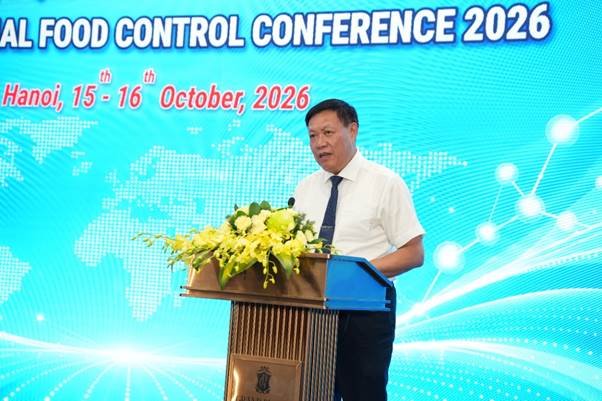
Deputy Minister of Health Do Xuan Tuyen delivers the opening address at FCC 2026.
Speaking at FCC 2026, Assoc. Prof. Dr. Le Thi Hong Hao, Director General of NIFC, expressed her sincere appreciation for the guidance and support of the Ministry of Health's leadership and the participation of policymakers, scientists, and experts from Vietnam and abroad.
She emphasized that, in the context of deepening international integration and rapidly evolving food supply chains, strengthening the legal framework, standardizing regulatory procedures, and improving transparency and public access to information are essential to enhancing the effectiveness of food safety management.
Food testing must become a scientific instrument supporting regulatory activities by providing reliable data for surveillance, early warning, risk assessment, and policymaking.
She further highlighted the need to implement modern technologies, digital transformation, laboratory capacity building, and international standards harmonization in coordination with institutional and regulatory reforms.
On behalf of NIFC, Assoc. Prof. Dr. Le Thi Hong Hao reaffirmed the NIFC's commitment to implementing the Ministry of Health's guidance, advancing scientific research and technological innovation, improving food testing quality, and strengthening international cooperation.
These efforts will help provide the scientific foundation for food safety management and policy development.
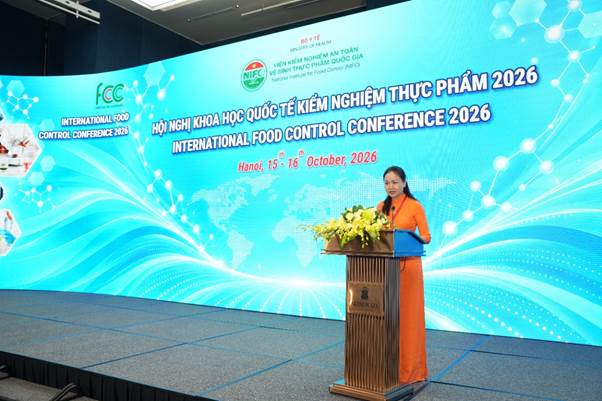
Assoc. Prof. Dr. Le Thi Hong Hao, Director General of NIFC, delivers her welcome remarks at FCC 2026.
Plenary Session: Connecting Science, Risk Assessment, and Regulatory Practice
Following the opening ceremony, FCC 2026 proceeded to its plenary session under the theme “Smart Food Safety Control towards International Harmonization.”
The session addressed pressing scientific and regulatory issues, with particular emphasis on the role of scientific evidence in policymaking and improving the effectiveness of food safety control.
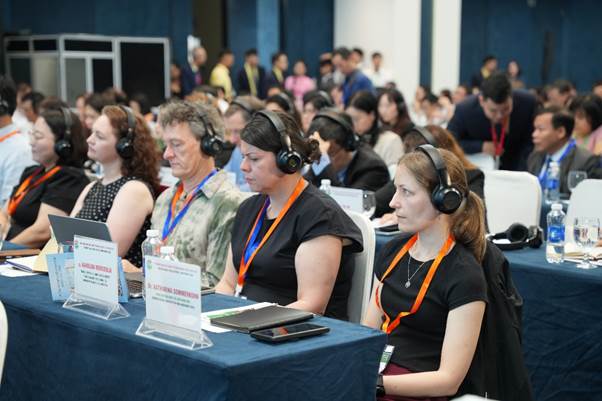
Experts from AOAC International (United States), the German Federal Institute for Risk Assessment (BfR), the China National Center for Food Safety Risk Assessment (CFSA), Abbott Nutrition, and NIFC shared their experience and approaches to food safety control.
The presentations covered five key topics: bridging science and regulation through international harmonization of analytical methods; the role of risk assessment in supporting risk management; internationally harmonized approaches to food safety assessment and surveillance; harmonization of terminology and approaches in toxicological risk assessment; and the current situation and potential solutions for advancing risk-based food safety control in Vietnam.
Of particular note, Assoc. Prof. Dr. Tran Cao Son, Deputy Director General of NIFC, presented an overview of the current situation and proposed solutions for advancing risk-based food safety control in Vietnam, connecting international experience with the practical requirements of the country's regulatory system.
The presentations highlighted the importance of developing reliable analytical methods, strengthening the use of scientific data in risk assessment, and progressively harmonizing analytical approaches and technical standards with international practices.
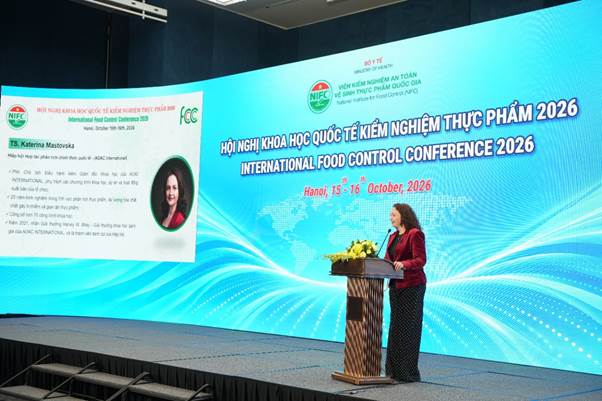
Dr. Katerina Mastovska (AOAC International) delivers her presentation during the plenary session of FCC 2026.
International Panel Discussion: From Scientific Evidence to Regulatory Decision-Making
Following the plenary presentations, an international panel discussion was moderated by Assoc. Prof. Dr. Tran Cao Son, Deputy Director General of NIFC.
The panel brought together representatives from the VFA (Ministry of Health), AOAC International, BfR, CFSA, and Abbott Nutrition.
Discussions focused on the relationship between scientific research, laboratory testing, risk assessment, and food safety regulatory decision-making.
Panelists shared their experience in applying scientific evidence to support policy development, selecting appropriate risk control measures, and improving surveillance effectiveness.
A key area of discussion was the need to promote harmonization of analytical methods and risk assessment approaches between Vietnam and international partners while ensuring their feasibility under Vietnam's practical conditions.
The panel provided an opportunity for direct dialogue between regulatory authorities and the scientific community, helping identify technical priorities and potential areas of cooperation to strengthen laboratory testing, risk assessment, and science-based food safety control.
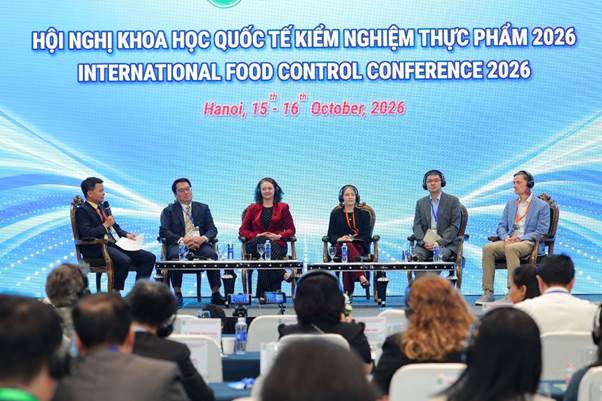
Vietnamese and international experts during the panel discussion on food testing and food safety.
Through FCC 2026, the NIFC aims to further strengthen collaboration among regulatory authorities, research institutions, testing laboratories, and businesses while promoting technology transfer, knowledge sharing, and the practical application of scientific research.
As a major international scientific event, FCC 2026 reinforces NIFC's role in advancing the research, development, and application of food testing science and technology.
It also contributes to the development of a more proactive, modern, risk-based food safety control system in Vietnam, progressively harmonized with international standards and practices.
Prepared by: Le Vinh Hoa – Department of Science, Training and International Cooperation, NIFC.
Additional Photos from FCC 2026