

- Folder Internal News
- Views 225
- Last Updated 31/03/2026
From 9 March 2026 to 13 March 2026, the National Institute for Food Control participated in the 45th Session of the Codex Committee on Methods of Analysis and Sampling (CCMAS45), held in Budapest, Hungary. The session was attended by approximately 230 delegates from 66 member countries, along with representatives from the Food and Agriculture Organization of the United Nations (FAO), the World Health Organization (WHO), the European Union, the Codex Secretariat, and other observer organizations
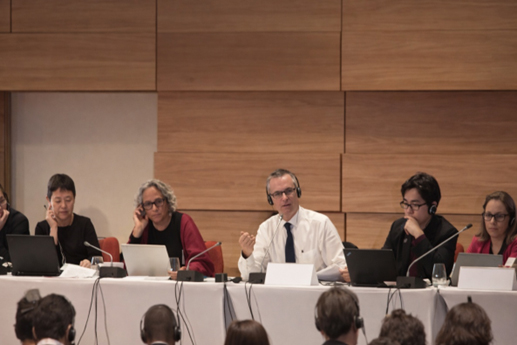
Figure 1. The 45th session was chaired by Dr. Attila Nagy, Director of the National Food Chain Safety Office (white shirt)
Chaired by Dr. Attila Nagy, Director of the National Food Chain Safety Office, the session guided discussions and decisions related to methods of analysis and sampling for food. The session focused on four main areas: (1) adoption and/or revision of analytical methods, numerical performance criteria (NPC), and sampling plans in Codex standards; (2) review, update, or withdrawal of outdated methods in CXS 234-1999; (3) further development of sampling plans and the CXS 234-1999 database; and (4) harmonization of terminology, principles, and formatting of methods to ensure consistent use across Codex committees, as detailed below:
1. Adoption/ Revision of methods of analysis, numerical performance criteria (NPC), and sampling plans in Codex standards
At CCMAS45, one of the key areas was the review and adoption of methods of analysis, numerical performance criteria (NPC), and sampling plans proposed by other Codex committees. Notably, the Committee adopted six sampling plan tables for total aflatoxins (AFT) and ochratoxin A (OTA) in certain spices, specifically nutmeg, dried chili, and paprika. The Committee also requested the Codex Committee on Contaminants in Foods to clarify the decision criteria for consignments of 25 tonnes or more when divided into sublots—namely, whether exceeding the maximum level (ML) in one sublot would lead to rejection of the entire lot or only the affected sublot. Regarding NPC, CCMAS45 agreed to remove the NPC for AFT while retaining the ML and endorsed the revised NPC for individual aflatoxins and for OTA. During these deliberations, the Committee also addressed highly specific technical parameters, including adjustments to the guidance on the “sum of components” approach. The report highlighted that the recovery range for AFT (60–115%) differs significantly from that for individual aflatoxins (40–120%), with the difference being statistically significant.
2. Review, update, or withdrawal of outdated methods in CXS 234-1999
CCMAS45 continued to advance the systematic review of “method packages” in CXS 234-1999 by product group. For fruit juices, the Committee agreed to forward certain methods for proposed withdrawal at CAC49, and established an electronic working group (EWG), chaired by Germany, to further review both expert-recommended methods and the remaining enzymatic/ISO methods that have not yet been fully assessed. For cocoa and chocolate products, due to the late submission of the EWG report and certain limitations preventing consensus conclusions, CCMAS45 decided to re-establish the EWG, chaired by the United States and co-chaired by Serbia, to continue the review. For sugars and honey, the Committee agreed to forward eligible methods to CAC49 for adoption/withdrawal, while re-establishing an EWG chaired by Uruguay and co-chaired by Brazil and China, working in English and Spanish, to further review the remaining methods and develop NPC for selected provisions. In addition, the session initiated a new review of milk and milk products through an EWG chaired by the United States, with a requirement to submit its report to the Codex Secretariat at least three months prior to CCMAS46.
3. Further development of sampling plans and the CXS 234-1999 database.
A notable systemic outcome of CCMAS45 was the clear support for consolidating all sampling plan information into CXS 234-1999 and organizing it in a searchable database format. During the discussions, centralizing all sampling plans in a single reference point was considered the most user-friendly approach. This direction is also consistent with earlier decisions of CCMAS36 (2015) and CAC39 (2016), which established that CXS 234-1999 should serve as the single reference document for methods of analysis and sampling. CCMAS45 further emphasized that sampling plans should not exist in parallel both in commodity standards and in CXS 234-1999, in order to avoid inconsistencies. On this basis, the Committee re-established an electronic working group (EWG), chaired by New Zealand and co-chaired by Germany, to review sampling plans in both commodity standards and CXS 234-1999 for alignment with CXG 50-2004 and statistical principles, as well as to consider their integration into both the current paper version and the future database format.
4. Harmonization of terminology, principles, and formatting of methods to ensure more consistent use across Codex committees.
A noted direction emphasized at the session was the continued strengthening of the role of CXS 234-1999 as the central reference document within Codex for methods of analysis and sampling. This aims to reduce the fragmentation of information across multiple commodity standards, thereby facilitating more convenient and consistent access and application. CCMAS45 further supported the approach of consolidating sampling plans into CXS 234-1999 and its associated database, rather than allowing them to remain scattered across various documents. This approach is expected to enhance the overall coherence of the Codex standards system and provide better support for regulatory authorities, laboratories, and conformity assessment bodies.
CCMAS45 also devoted significant attention to the harmonization of terminology and formatting of method-related principles in CXS 234-1999. According to the report, the EWG reviewed and proposed revisions aimed at clarifying definitions, standardizing terminology in line with internationally recognized documents, and improving the consistency of analytical principles, abbreviations, and referenced documents. It also identified inconsistencies between CXS 234-1999 and relevant commodity standards. Notably, the EWG proposed the publication of Appendix I together with three annexes (Annexes A, B, and C) as a technical document to support CCMAS and other Codex committees. This document was defined as a reference document, subject to further updates as needed. At the technical level, CCMAS45 also agreed to include a general reference to the International Organization for Standardization Online Browsing Platform (OBP) for definitions of analytical terms, while retaining definitions not yet available in the OBP that were developed by other standard-setting organizations or by the EWG. To continue this work, the session established a new EWG chaired by Chile and co-chaired by Brazil to further address harmonization issues within CXS 234-1999 and to prepare a report for the next session.
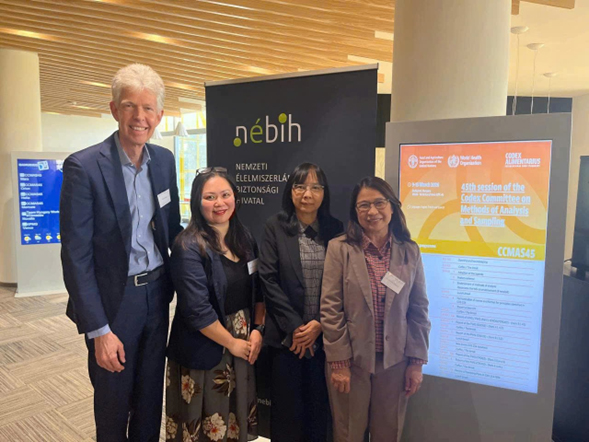
Figure 2. The Vietnamese delegation included MPharm. Nguyen Thi Hong Ngoc from the National Institute for Food Control (second from the left)
5. Newly established working groups and re-established/re-activated working groups.
At CCMAS45, the Committee agreed to establish several new electronic working groups (EWGs). Notably, these include groups on the review of methods for fruit juices, the initiation of method review for milk and milk products, and the harmonization of provisions in CXS 234-1999. At the same time, CCMAS45 re-established a number of EWGs to continue addressing technical issues still under in-depth review, such as those related to cocoa and chocolate, sugars and honey, and guidance on sampling plans for bulk materials/heterogeneous lots.
Newly established EWGs:
- The EWG chaired by Germany to continue the review of methods in the method package for fruit juices, including expert-recommended methods and remaining enzymatic/ISO methods.
- The EWG chaired by the United States to initiate the review of the method package for milk and milk products.
- The EWG chaired by Chile and co-chaired by Brazil to continue the harmonization of matrices in CXS 234-1999 and to submit proposed revisions to CCMAS46.
Re-established / re-activated EWGs
- The EWG on methods for cocoa and chocolate products, chaired by the United States and co-chaired by Serbia, was re-established to continue the review due to the late submission of the previous report and remaining unresolved issues.
- The EWG on methods for sugars and honey, chaired by Uruguay and co-chaired by Brazil and China, was re-established to further review relevant methods and develop NPC for selected parameters.
- The EWG on sampling plans for bulk materials / heterogeneous lots, chaired by New Zealand and co-chaired by Germany, was re-established to continue developing guidance, particularly with practical examples for mycotoxins.
The outcomes of CCMAS45 demonstrate that Codex continues to strengthen both the scientific foundation and the practical applicability of its system of methods of analysis and sampling in the food sector. The ongoing review, updating, harmonization, and gradual removal of outdated methods not only enhance the quality of Codex standards but also improve consistency, transparency, and their practical implementation across member countries. At the same time, the decisions taken at the session reflect a clear direction toward further refining method groups for key commodity sectors such as fruit juices, cocoa, sugar, honey, milk, and milk products. This provides a solid basis for regulatory authorities, standard-setting bodies, laboratories, and other stakeholders to proactively monitor, update, and prepare for the implementation of forthcoming technical changes.
In its role as the Lead of the Vietnam Codex Technical Committee on Methods of Analysis and Sampling (under Decision No. 4392/QĐ-BYT dated 4 December 2023 issued by the Minister of Health), the National Institute for Food Control has consistently engaged with Codex activities, actively participating in and contributing to various Codex committees to share scientific data and promote international harmonization of standards. Since 2024, the Institute has established the Food Safety Risk Assessment Center (VFSA), serving as a focal point for research and the provision of scientific evidence to support food safety risk management in Vietnam.
Nguyen Thi Hong Ngoc
Laboratory of Food Toxicology and Allergens
National Institute for Food Control