

- Folder Internal News
- Views 231
- Last Updated 22/05/2026
The 7th Meeting of Science and Food Safety Dialogue was held in Seoul, Republic of Korea, from May 13 to 14, 2026; the National Institute for Food Control (NIFC) participated as an official member and delivered a presentation on food safety risk assessment, thereby affirming Viet Nam's growing role on the international food science map.
The Science and Food Safety Dialogue is a government-level collaborative platform among food safety regulatory and risk assessment agencies across the Asia, Australia, and New Zealand regions. The core objective of the Dialogue is to strengthen partnerships and enhance the quality of science and food safety, thereby facilitating international trade. The Dialogue serves as a robust scientific and technical supporting arm for the Asia-Pacific Food Regulatory Authority Summit (APFRAS) in addressing common food safety challenges and technological innovations.
The 7th Meeting of the Dialogue was held in person in Seoul, Republic of Korea, hosted by the National Institute of Food and Drug Safety Evaluation (NIFDS), under the Ministry of Food and Drug Safety (MFDS). The conference convened leading regional regulatory agencies, including FSANZ (Australia - New Zealand), MAFF/CAA/MHLW (Japan), SFA (Singapore), BPOM (Indonesia), MoH (Malaysia), USDA (United States), the World Health Organization (WHO), and NIFC (Viet Nam).
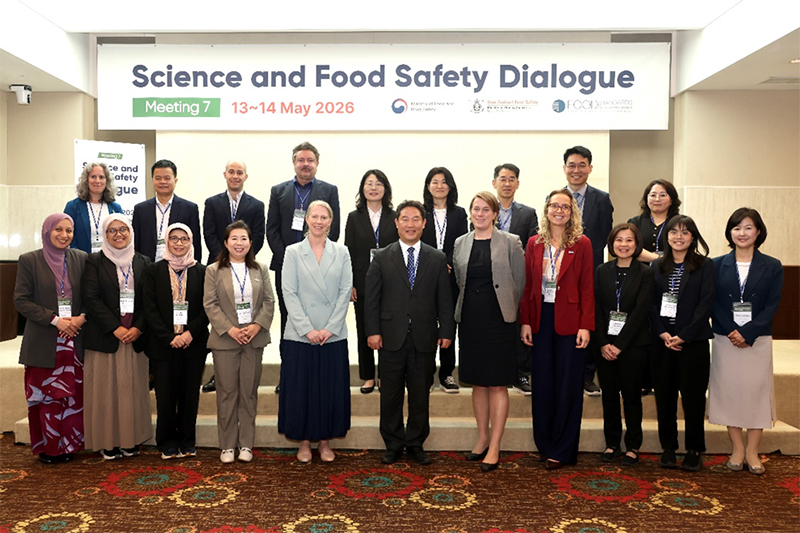
Assoc. Prof. Tran Cao Son, NIFC’s Deputy Director attended at the Dialogue
Following a period of participation as an observer, NIFC officially accepted the invitation to become a Dialogue member at the beginning of 2026. At this meeting, the NIFC delegation, led by Assoc. Prof. Dr. Tran Cao Son, Deputy Director, actively contributed to the technical discussion sessions. Notably, Assoc. Prof. Dr. Tran Cao Son delivered a keynote report titled "Risk Assessment on Processing Contaminants". The report candidly addressed Viet Nam's current challenges, such as overlapping management, the deficit of Total Diet Study (TDS) data, and limited risk assessment capacity. Concurrently, NIFC shared research findings on evaluating exposure levels to thermal processing-induced hazardous substances, namely PAHs, Nitrosamines, Acrylamide, and HCAs.
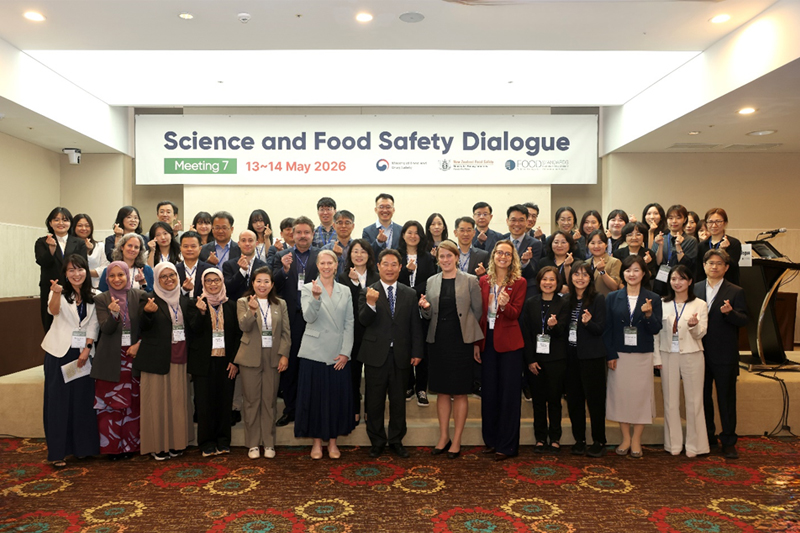
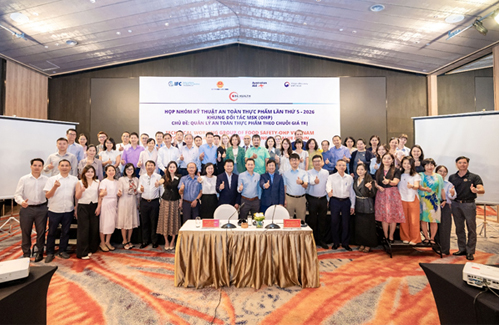
All the participants to the Dialogue
The agenda of the 7th Meeting encompassed multiple in-depth discussion sessions directly addressing pressing global food safety issues:
- Sharing Challenges: Participating countries shared current regulatory challenges, ranging from the management of foodborne illnesses to the application of AI and QR codes in digital labeling.
- Keynote Reports: In addition to NIFC's report, representatives from New Zealand Food Safety (NZ MPI) also presented a keynote on strategies for mitigating Campylobacter infection.
- The Dialogue discussed amplifying the region's voice in FAO/WHO global standard-setting forums such as JECFA, JEMRA, and JMPR.
- Workstream Progress Updates:
+ Workstream 1: New Foods Management (Cell-based meat), led by SFA (Singapore), focusing on hygienic practice standards and safety assessment of cell culture media.
+ Workstream 2: Emerging Contaminants (PFAS), led by SFA (Singapore), sharing surveillance information and the transition toward advanced analytical methods.
+ Workstream 3: Food Contact Materials, encompassing recycled plastic packaging led by FSANZ (Australia), hazard identification via advanced analytical technology (led by SFA), and standardization of microplastics testing methods (led by MFDS).
- The conference established future priority activities, including enhancing regional capacity, conducting workshops on New Approach Methodologies (NAMs) for risk assessment, and strengthening broader integration with APFRAS.
- The 8th Dialogue meeting is expected to be held virtually in November 2026.
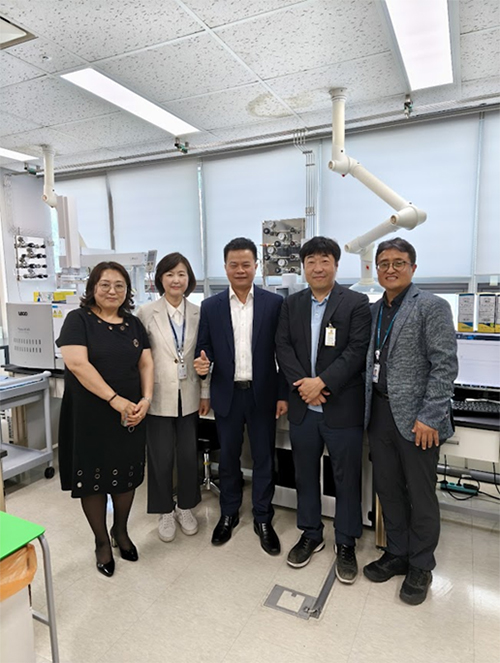
Assoc. Prof. Tran Cao Son officially visited the laboratories of NIFDS
Deep engagement in the Science and Food Safety Dialogue affirms Viet Nam's robust strategy for international integration. Moving forward, through the Viet Nam Center for Food Safety Risk Assessment (VSFA), NIFC will strive to establish a domestic and international expert network to systematically address complex food safety challenges. The forthcoming focus of food safety science in Viet Nam will involve transitioning to a risk-based management system, investing in the application of Whole Genome Sequencing (WGS) technology for foodborne outbreak investigations, and formulating a 5-year plan for the Total Diet Study (TDS) aimed at building shared databases and participating in technical capacity-building training programs. Food safety science in Viet Nam not only targets the protection of domestic consumer health but also stands ready to provide solid scientific evidence, contributing to the standard-setting process and promoting sustainable trade within the Asia-Pacific region