

- Folder Technical News
- Views 4721
- Last Updated 23/03/2026
On 2 September 2025, China promulgated the national food safety standard GB 2762–2025, which specifies maximum limits for contaminants in food [1]. This standard applies to contaminants arising during cultivation, production, processing, packaging, storage, transportation, distribution, and consumption of food, as well as those originating from environmental pollution. The contaminants covered include lead, cadmium, mercury, arsenic, tin, nickel, chromium, nitrite, nitrate, benzo[a]pyrene, N-nitrosodimethylamine (NDMA), polychlorinated biphenyls (PCBs), and 3-chloro-1,2-propanediol (3-MCPD) [1]. The contaminants addressed in this standard do not include pesticide residues, veterinary drug residues, biotoxins, or radioactive substances [1].
GB 2762–2025 will officially enter into force on 2 September 2026, replacing the current GB 2762–2022 standard [2]. The revised standard introduces several amendments as follows [1][2]:
1. The maximum limit for nitrite (NO2-) in bottled drinking water (excluding natural mineral water) has been adjusted from 0.005 mg/L to 0.1 mg/L, which is equivalent to the maximum level specified in Vietnam’s QCVN 6-1:2010/BYT for natural mineral water and bottled drinking water (0.1 mg/L) [3]. The limit of 0.1 mg/L for nitrite is lower than those established in certain international references, such as 0.5 mg/L under the European Union (EU) Drinking Water Directive and 3 mg/L recommended by the World Health Organization (WHO) [4][5]. The occurrence of nitrate and nitrite in water primarily originates from agricultural activities (inorganic fertilizers and manure), wastewater treatment processes, human nitrogen – containing waste, as well as emissions from industrial activities and motor vehicles [5].
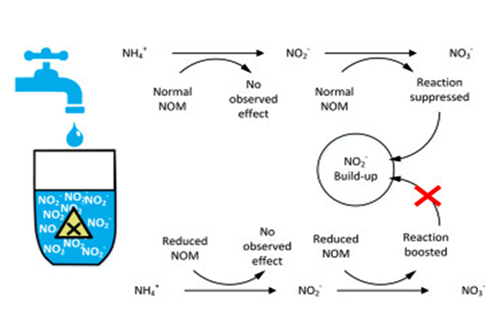
Figure 1. Formation of nitrite in water sources
2. The inclusion of a maximum limit for nitrite in edible bird’s nest products, set at 30 mg/kg. This is equivalent to the quality specification established for raw bird’s nest products in Vietnam, where nitrite is limited to ≤ 30 mg/kg under Decree No. 13/2020/ND-CP. The presence of nitrite in bird’s nest may originate from multiple sources [6]. According to research findings, nitrite levels in raw bird’s nest are often relatively high, which is associated with the formation of ammonia through the anaerobic decomposition of organic matter by microorganisms in soil and bird droppings [7]. Under conditions typical of caves or enclosed swiftlet houses with high humidity – where ammonia tends to accumulate – subsequent transformation processes may lead to the formation of nitrite and increase the likelihood of nitrite infiltration into the nests [7]. In addition, inadequate experience in hygiene practices and environmental management in swiftlet farming, particularly in newly established facilities, may further contribute to elevated nitrite levels in raw bird’s nest [7]. Beyond natural sources, some international cases have reported the intentional addition of sodium nitrite to unprocessed white bird’s nest to induce a red coloration resembling that of red bird’s nest, thereby producing counterfeit products that can be sold at higher prices for economic gain.
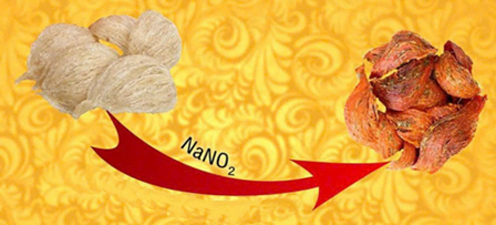
Figure 2. Illustration of the illegal use of sodium nitrite to produce red bird’s nest
3. The removal of the maximum limit for N-nitrosodimethylamine (NDMA) in processed dried meat products, as this category has been reclassified under “Meat and meat products.” It should be noted that the “Meat and meat products” category continues to specify a maximum limit of 3.0 μg/kg for NDMA. For process-induced contaminants such as benzo[a]pyrene (B[a]P, a polycyclic aromatic hydrocarbon) and NDMA (nitrosamine), Vietnam has not yet established regulatory limits for these substances in processed food products. Currently, only 3-MCPD is regulated, with a maximum level of 1 mg/kg in soy sauce, seasoning sauce, and oyster sauce, as stipulated in Decision No. 11/2005/QĐ-BYT.
4. With respect to heavy metals, GB 2762–2025 introduces no changes compared with GB 2762–2022.
The National Institute for Food Control (NIFC) has developed and implemented analytical methods for the aforementioned groups of contaminants; these methods fall within the scope of accreditation under VILAS. In addition, the Vietnam Centre for Food safety risk assessment (VFSA) under the Institute is mandated to support risk management authorities in Vietnam by providing scientific evidence to inform the development and revision of regulations and standards related to food contaminants.
Written by: Tran Huy Hieu – Vietnam Center for Food Safety Risk Assessment
REFERENCES
- National Health Commission of the People's Republic of China; State Administration for Market Regulation. GB 2762-2025. National Food Safety Standard: Maximum Levels of Contaminants in Foods [Internet]. Beijing: China National Center for Food Safety Risk Assessment; 2025 [cited 2026 Mar 9]. Available from: https://sppt.cfsa.net.cn:8086/db?type=2&guid=481961F1-55FC-48B3-88A4-F86866B041FF
- National Health Commission of the People's Republic of China; State Administration for Market Regulation. GB 2762-2022. National Food Safety Standard: Maximum Levels of Contaminants in Foods [Internet]. Beijing: China National Center for Food Safety Risk Assessment; 2022 [cited 2026 Mar 9]. Available from: https://sppt.cfsa.net.cn:8086/db?type=2&guid=3989AF03-4750-415C-9CAE-271604C35B59
- National Technical Regulation QCVN 6-1:2010/BYT on Natural Mineral Water and Bottled Drinking Water.
- European Parliament; Council of the European Union. Directive (EU) 2020/2184 of the European Parliament and of the Council of 16 December 2020 on the quality of water intended for human consumption. Official Journal of the European Union. 2020; L435:1–62.
- World Health Organization. Nitrate/nitrite. Geneva: World Health Organization; [cited 2026 Mar 9]. Available from: https://www.who.int/teams/environment-climate-change-and-health/water-sanitation-and-health/chemical-hazards-in-drinking-water/nitrate-nitrite
- Government Decree No. 13/2020/ND-CP: Detailed Guidelines for the Law on Animal Husbandry.
- Le HP, Bui HH, Nguyen TT, Nguyen TKC, Luu GL, Bui TH. Survey on microbial contamination, heavy metals and nitrite in edible bird’s nests from several provinces in Southern Vietnam. J Food Testing Food Saf. 2023; 6(1).